

Biggest Corporate Scandals of 2025–2026: Reputation Damage and Recovery
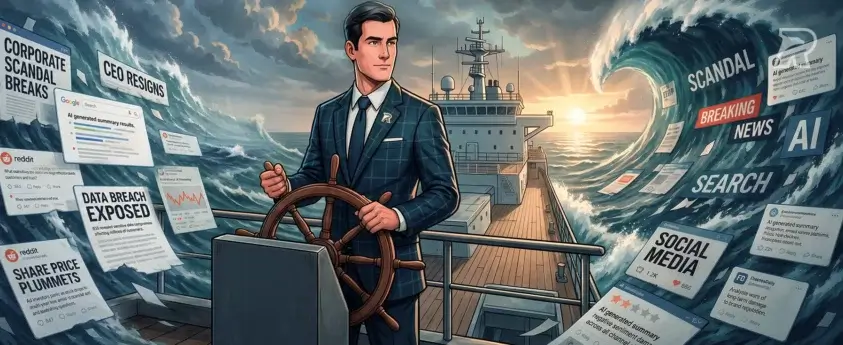
The biggest corporate scandals of 2025–2026 show that a reputation crisis does not end when the news cycle moves on. Search results, Reddit, YouTube, reviews, mainstream media, and AI can keep damaging stories visible long after public attention fades. In this guide, I look at recent corporate scandals, why some disappeared while others caused lasting reputation damage, what companies should do during the first 72 hours, and how reputation recovery works.
The difference today is that the biggest corporate scandals are spread faster and remembered longer. Thus, on June 2, 2026, the news about Congressman George Santos and his suspicious trading activity on Kalshi became the main topic. Within hours, Reuters, Business Insider, Bloomberg, and dozens of other platforms published their own versions of the story.

When Does a Corporate Scandal Become a Reputation Crisis?
Most corporate governance scandals, including some of the biggest corporate scandals, don’t become a corporate image crisis with one article. They become crises when the story is copied over and over again. That’s when online crisis reputation management becomes the only solution to handle the scandal.
Companies have a short window to assess the situation and damage, but unfortunately, not everyone acts quickly after a scandal. Some early warning signs may indicate that an incident is escalating:
- A negative article starts outranking the official website and reputable sources.
- Google autocomplete starts suggesting keywords from scandalous headlines.
- The article is copied and cited across multiple sources.
- The news starts spreading across social media.
- AI starts mentioning the scandal.
- Review platforms are getting 1-star reviews.
- Old negative stories begin resurfacing.
The rest of the signs, such as partners asking questions and employees panicking, stay behind closed doors.
Biggest Corporate Scandals of 2025–2026
When Viral Backlash Doesn’t Become a Reputation Crisis
Not all scandals, even some of the biggest corporate scandals, become a corporate or personal reputation crisis. So did the McDonald’s CEO scandal with a viral video, where Chris Kempczinski was presenting a new Big Arch burger. The video immediately went viral, and it was mocked by everyone. Other fast food brands joined the hype and posted their versions.
What happened next
The controversy became a meme rather than a long-lasting effect. There was no evidence that the incident had damaged business and revenue. So bad PR can be just PR, not becoming a crisis. But, of course, much depends on customers’ reaction (which is sometimes unpredictable).

When Leadership Overshadows the Brand
Elon Musk’s controversies became one of the most prominent examples of a business scandal 2025. His political involvement and public disputes with President Donald Trump have shifted public opinion several times, resulting in a 9% drop in Tesla sales.
What happened next
News coverage, financial analysts, investors, and social media questioned whether Musk’s personal brand had become a liability for Tesla.
When One Allegation Uncovered Years of Problems
In July 2025, VTuber agency VShojo was publicly accused of withholding more than $500,000 in charity donations. Within days, multiple creators shared similar allegations of unpaid revenue, and the company’s CEO announced that VShojo would shut down.
What happened next
The scandal resurfaced old stories from former creators, employees, contractors, and community members that had received little attention before. A single financial dispute put under question VShojo’s reputation.

Takeaway: Companies don’t suffer the greatest damage from a single incident. They suffer because the stories resonate and become persistent digital assets. Once this happens, every new customer, investor, partner, or employee starts their research with the scandal.
Why Some Scandals Caused Lasting Reputation Damage
Every day I read dozens of scandalous titles about the biggest corporate scandals. Some don’t resonate with me at all, and some disappear within days; others stay and spread in search results. There is a pattern explaining how a scandal damages reputation.
Executives deny obvious facts
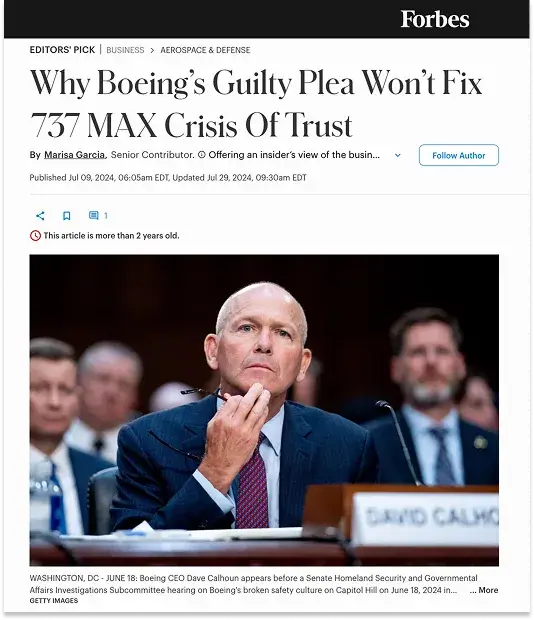
Even in the biggest corporate scandals, when facts are still spreading, companies may avoid addressing them. Every delayed response creates new headlines. Check Boeing’s recent corporate scandals; safety failures, fraud, and production lapses have become part of the company’s story. The first scandal that wasn’t addressed in time became the first domino piece falling.
The company responds too late
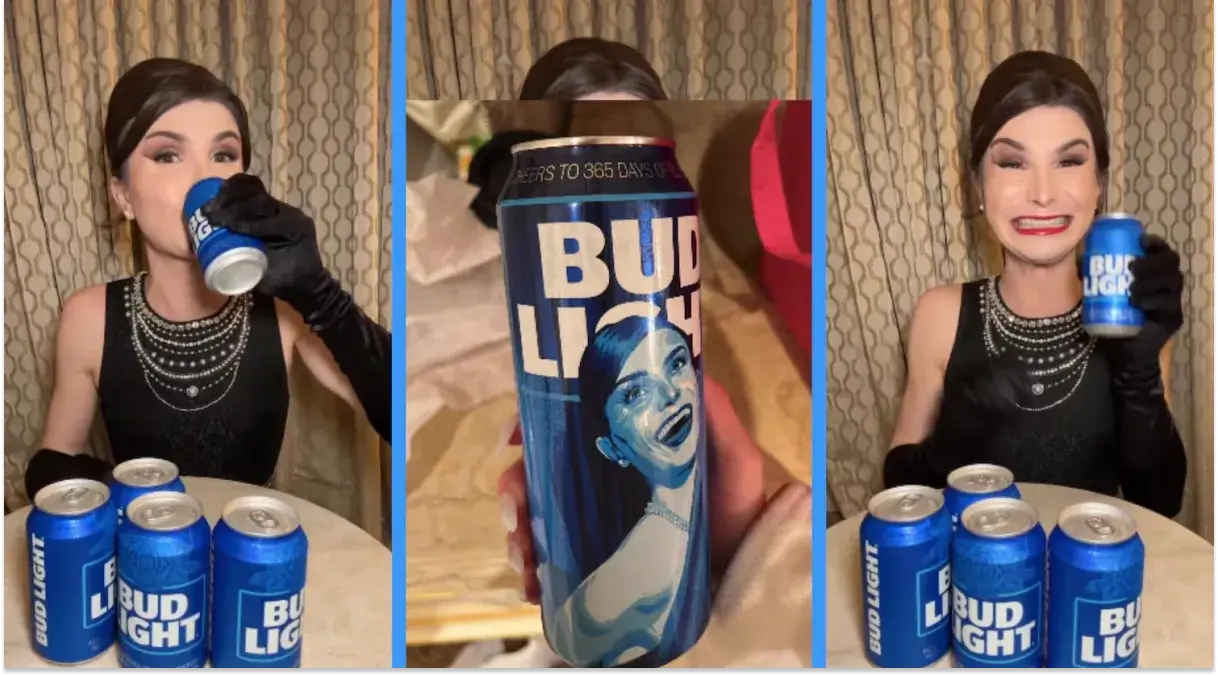
In the biggest corporate scandals, the company often addresses the scandal chaotically. One department makes a public announcement, another talks to investors, delivering an absolutely different message, and internal communication has the third version of the case. This happened to the Bud Light ad with the transgender influencer Dylan Mulvaney. The public boycotted the brand after the announcement by the VP of marketing. Wrong and delayed messaging caused a $1.4 billion loss in sales.
AI starts repeating the story.
In the biggest corporate scandals, as soon as the negative information outranks authoritative sources, AI-generated responses start including the scandalous information.
Wikipedia updates
Even when companies stop existing, Wikipedia pages remain live. I searched for information about Theranos after watching the TV series. The company no longer exists, but journalists, AI systems, and users in general continue to reference the story.
Reddit dominates search
The biggest corporate scandals often start with mainstream news, but they live and become reputation damage on Reddit communities, YouTube channels, and investigative videos.
How Search, Social Media, and AI Amplify Corporate Scandals
An incident is not a scandal if it doesn’t spread across the web and become the topic of publications and communities.
With the biggest corporate scandals, the news usually appears on all platforms, but not all get the same attention. The most common places to look for scandalous headlines are:
- Authoritative news agencies like Reuters and Bloomberg
- Industry media
- LinkedIn discussions
- Reddit threads
- YouTube investigations
- Google indexing
- AI mentions
In the biggest corporate scandals, not every platform causes the same damage.
The most common mistake companies make is trying to remove the source or the article with the most views. But the real damage can come from a different place.
Investors are more likely to trust Reuters or Bloomberg.
Customers start with Google Search and Google Reviews.
Job candidates check Reddit, Glassdoor, and LinkedIn.
We always start with a question: “Which platform influences decision-makers?”
This is why our strategy at Reputation America starts with identifying
- Which pages dominate Google’s first page?
- Which sources does AI use in answers?
- Which platforms influence the audience?
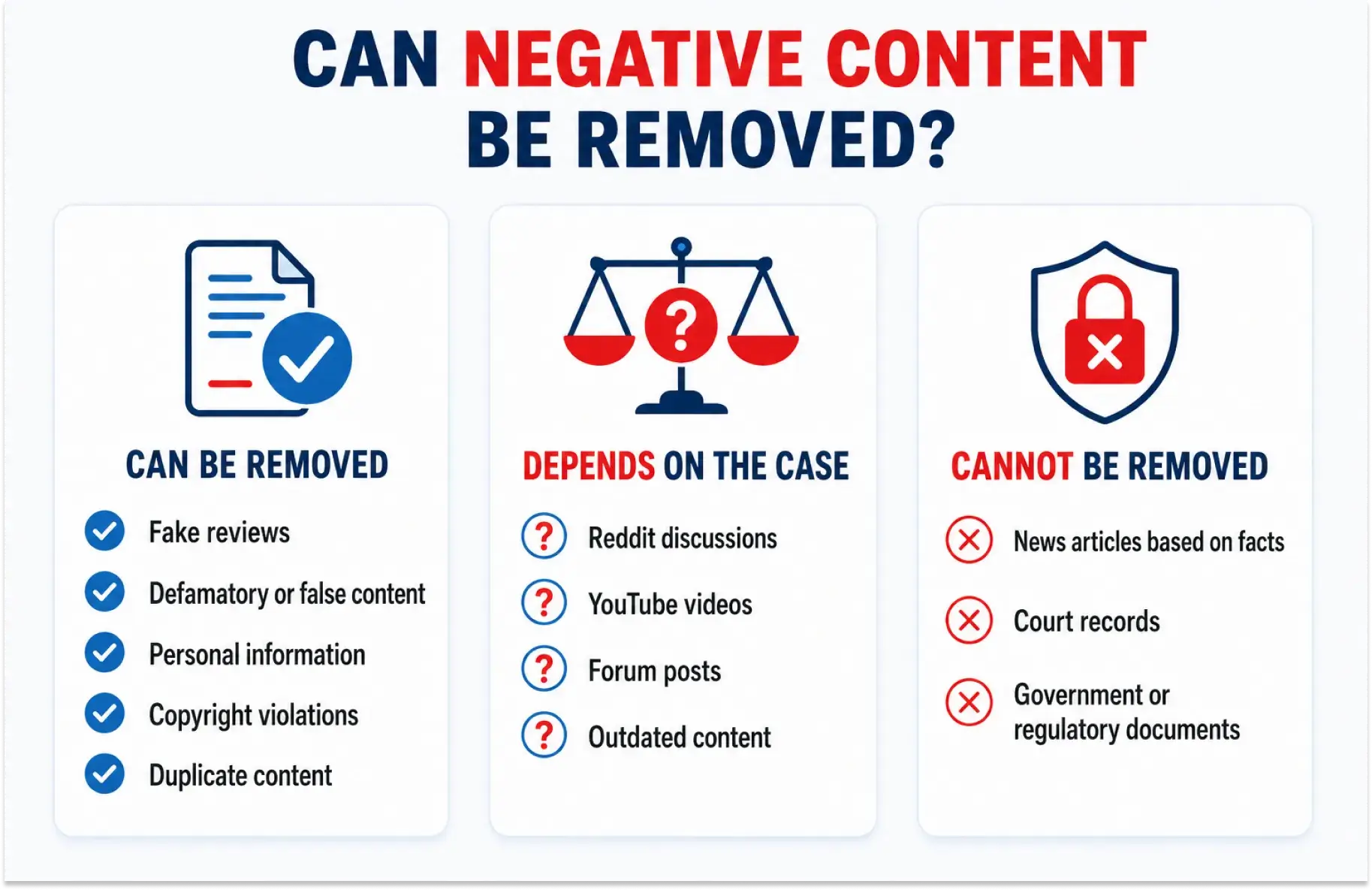
- Which content can be removed, corrected, or deindexed?
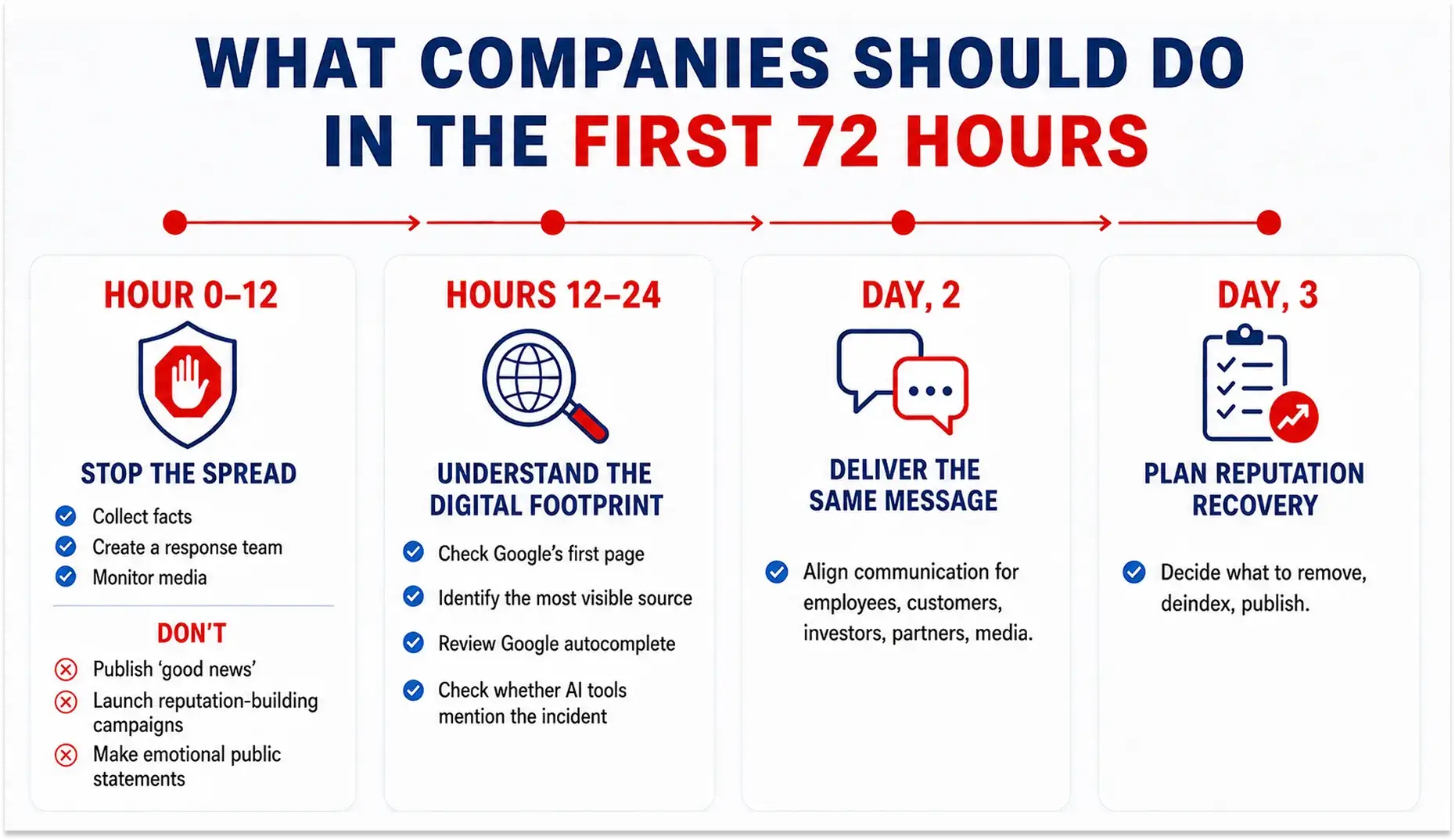
What Companies Should Do in the First 72 Hours
The first few days after an incident determine whether it remains an internal case or turns into a corporate or personal reputation crisis. During the first 72 hours, instead of trying to repair their good name, companies should understand what happened, track the information, and prevent escalations.
Can Negative Content Be Removed After a Corporate Scandal?
After the biggest corporate scandals, not all negative content can or should be removed. A universal approach for all cases simply doesn’t exist.
When Content Removal Is the Wrong Strategy
Based on our experience, we never advise our clients to remove content in two cases:
The crisis is still active.
If the news is still appearing, removing one publication will not stop the crisis.
The underlying problem is not fixed.
Removing one or more negative reviews will not solve the root cause, and the complaints will keep coming back.
How Online Reputation Crisis Management and Recovery Work
A reputation crisis may look similar on the surface: negative news appears, reviews increase, social media fuels the hype, and search results change. However, the strategy we implement changes from case to case.
Step 1. Investigating before acting
Before giving any advice, we research how the negative content appeared. We first determine whether we are dealing with an organic reaction or a coordinated campaign. If the initial source is reputable, journalists carry out independent investigations, and public discussions grow gradually, we generally classify these as organic. But when multiple websites copy the same article from an unknown source and use the same wording, we investigate the possibility of a coordinated campaign.
Step 2. Assessing risks
Once we understand the story, we evaluate the future development and escalation.
Step 3. Choosing the right strategy
Some cases may not require content removal, and depending on the investigation, we may need brand image analysis, informational removal, deindexing, replying to reviews, or negotiation with publishers.
FAQ
Some crises disappear within days, while others remain visible in search results for years. The duration depends on the case and media attention.
The first period is about stabilizing the crisis. Reputation recovery should begin only after the company addresses the issue and new negative publications slow down.
Crisis communication is reactive; it manages the incident through public statements and stakeholder communication. Reputation management is a long-term commitment focused on recovering reputation.
AI systems summarize information from existing sources. If top-ranking content includes information about a scandal, AI-generated answers may repeat that narrative even after the attention has faded.
Before recommending any solution, we analyze the case and find the best strategy: content removal, deindexing, negotiations, or long-term reputation recovery.
List of sources






This article does not have any comments. Be first to leave one.