

The Easiest Way To Remove Bad Trustpilot Reviews
Still thinking Trustpilot reviews are just comments no one pays attention to? I’ve heard so many cases about reviews destroying businesses and reputations. While for us these are just cases, the reality we live in forces us to take reviews more seriously than simply comments. Trustpilot review removal is no longer optional for businesses that care about reputation.
As for Reputation America’s team, we know exactly how Trustpilot negative reviews affect businesses, and we also know what you need to do to get them removed.
Does Trustpilot Remove Negative Reviews?
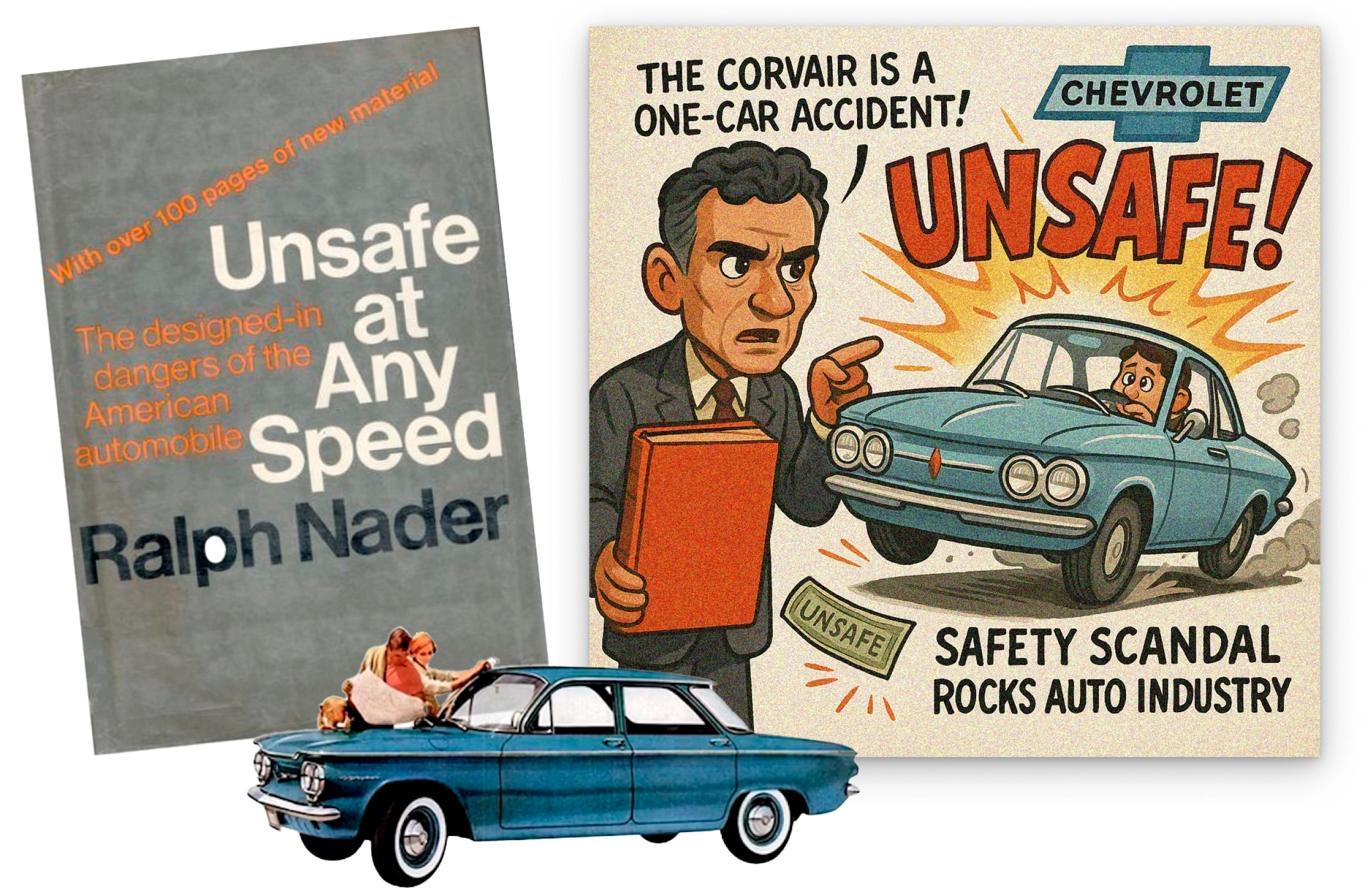
Ruining reputation ruin isn’t a modern “thing.” In 1965, Ralph Nader published Unsafe at Any Speed, where he criticized the Chevrolet Corvair. His “negative review” dropped Chevrolet sales by 50% in just one year. While General Motors couldn’t simply “flag” a book and claim removal, modern businesses have more recourse against damaging information
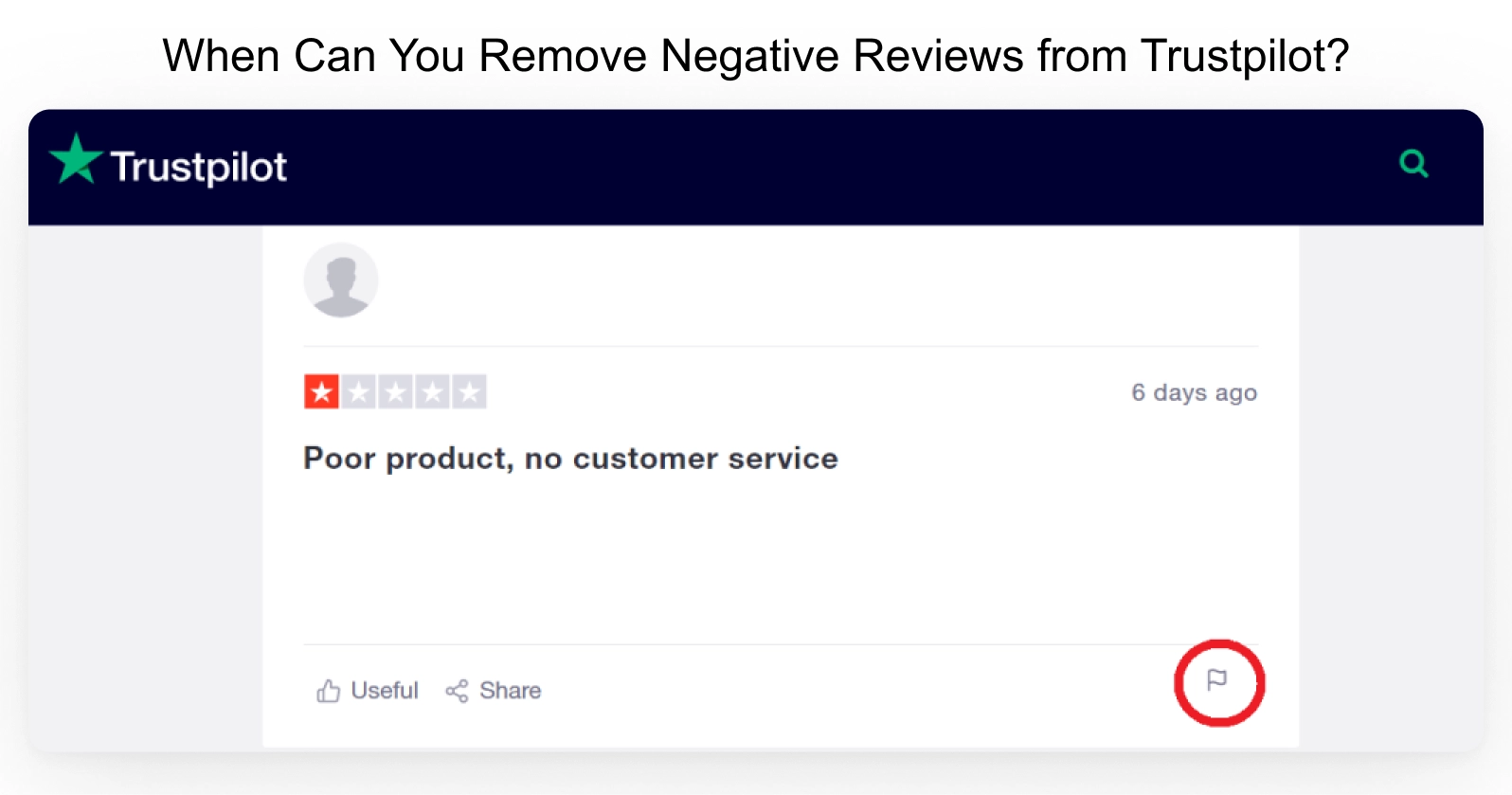
Let’s get back to Trustpilot. Just like Google and most platforms, Trustpilot removes negative reviews, but not simply because you dislike them or because they are critical. It has its policies and removes complaints under specific circumstances. The common procedure for removing negative or fake content is to flag it and wait for a Trustpilot support response.
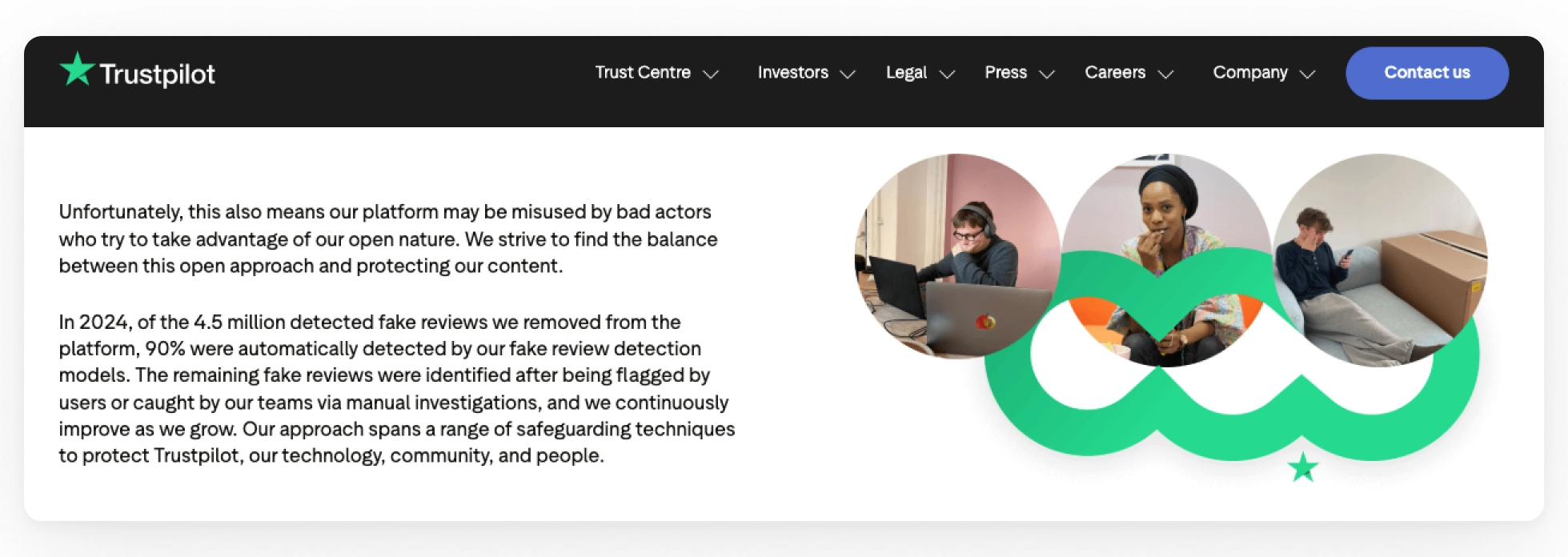
According to Trustpilot’s 2024 transparency report, the platform removed approximately 4.5 million fake reviews globally for violating its guidelines. This represents about 7.4% of all submissions to the platform.
Trustpilot Review Guidelines.
Trustpilot review removal service flags reviews that violate their Content Guidelines. The entire game is knowing how to frame your removal request and how to delete a Trustpilot comment. Because if Trustpilot doesn’t trust your evidence, your request, and probably future requests, will be ignored.
- Fake or misleading reviews are strictly forbidden. It covers fake comments from competitors, ex-employees, or people who never purchased your product.
- Defamatory or harmful content that contains hate speech, threats, harassment, or defamation.
- Privacy violations such as sharing personal information (phone number, address, private email) without consent, posting confidential business data, or images and videos.
- Advertising or spam that promotes another business
- Off-topic content, advertising, or spam that promotes another business, discusses competitors instead of your company, or contains spam.
In the United States, the Consumer Review Fairness Act protects genuine customer feedback but is against fraudulent or defamatory content. From our experience working with the moderation team, Trustpilot is one of the most flexible and responsive review platforms for content removal, but I have news for you.
The good news:
- Clear guidelines make it easier to identify removable content
- Legal framework supports removal of negative reviews
- The platform actively monitors for policy violations
The bad news:
- Genuine negative reviews from real customers cannot be removed, even if they are damaging
- Feedback with a lack of evidence of a policy violation may not be removed
- The claim process can be slow and bureaucratic
- Businesses need to prove that the negative review is a guideline violation, not the opinion.
Why is online reputation management becoming such a costly task, and why is it wise to trust your reputation to our team? Everything is simple. To increase your brand presence, you need to register on as many platforms as possible. To manage your reputation, you either need time, a dedicated person, or to outsource the service. Reputation is big business.
Trustpilot Review Removal: Easy vs Hard Cases
Let me share two real cases that illustrate the spectrum of removal difficulty.
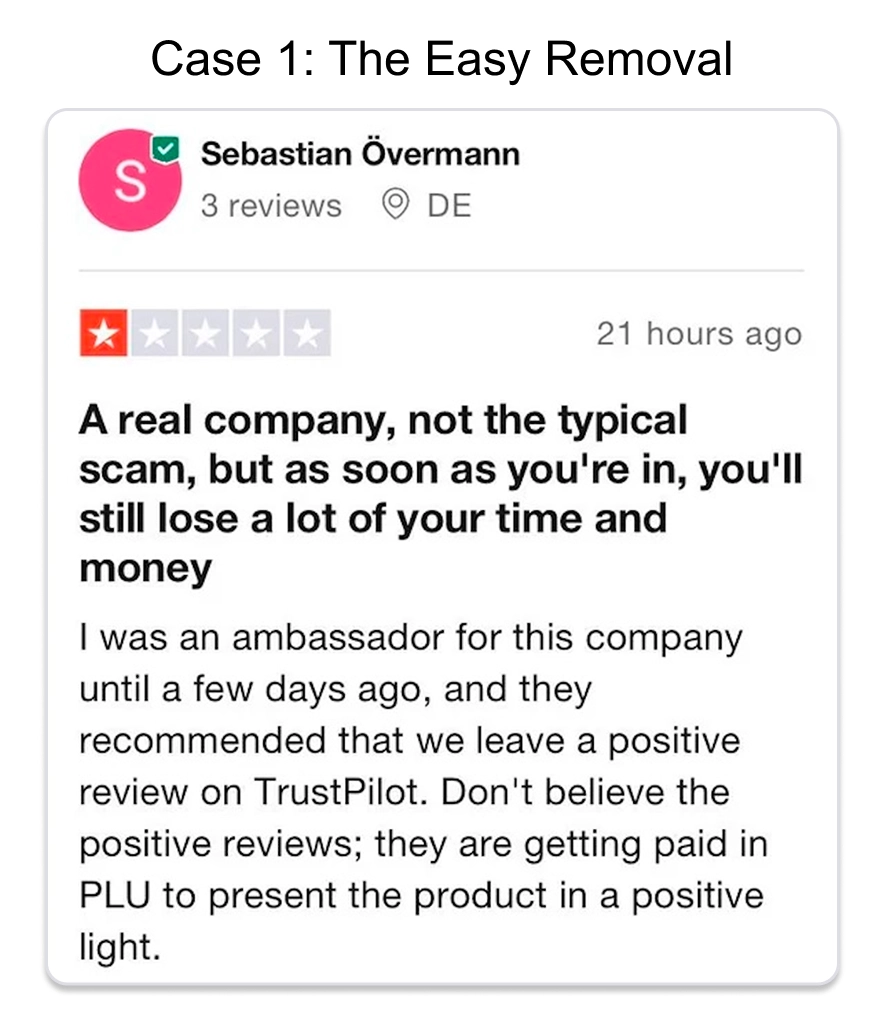
One of the “easiest” cases is removing an ex-employee complaint on Truspilot. According to Trustpilot’s content guidelines, only existing customers can leave reviews. Ex-employee feedback violates this policy. In our practice, such cases are removed within 48 hours and have the lowest claim rejection rates.
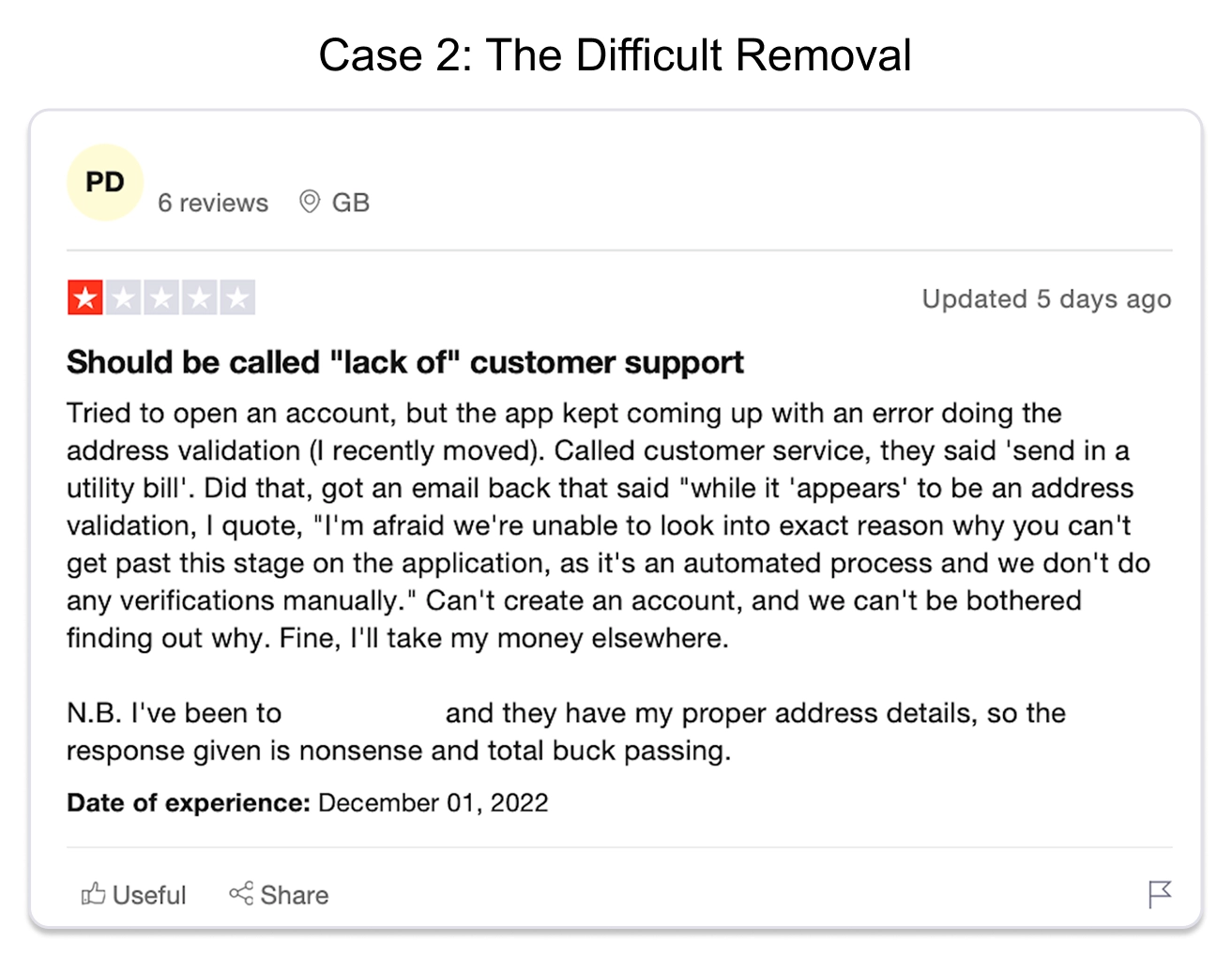
The hardest removal category is reviews from real customers describing genuine experiences in detail and with evidence. If the fundamental facts of the dispute are accurate, Trustpilot protects these reviews as legitimate consumer experiences regardless of tone or business impact.
In these cases, we begin the removal process by providing evidence against the customer’s claims (if there are any). There are cases where the evidence is not enough for removal, and we advise our clients to respond and try to resolve the complaint.
So, if your business got a negative comment, I have news for you: the good and the bad news.
The good news:
- Fraudulent feedback can be removed with proper evidence
- Clear violations are processed relatively quickly
- Documentation requirements are straightforward
The bad news:
- Legitimate negative comments are protected
- Gray-area cases are often ruled in favor of the reviewer
- The appeals process can be lengthy, requiring expertise
How to Remove Negative Reviews on Trustpilot
Trustpilot shares success stories of how companies benefited from positive testimonials, and I totally agree, but what about negative ones?
Businesses also share Trustpilot’s positive feedback on their website, put the Trustpilot widget on the front page, promote customer testimonials through their social media, and share the links whenever and wherever possible. But one negative comment can pop up and ruin all this effort. If you have an active Trustpilot account, the best thing you can do is to check your profile once a week, or at least once every two weeks. If you still missed a negative review that is ruining your TrustScore, you have three paths.
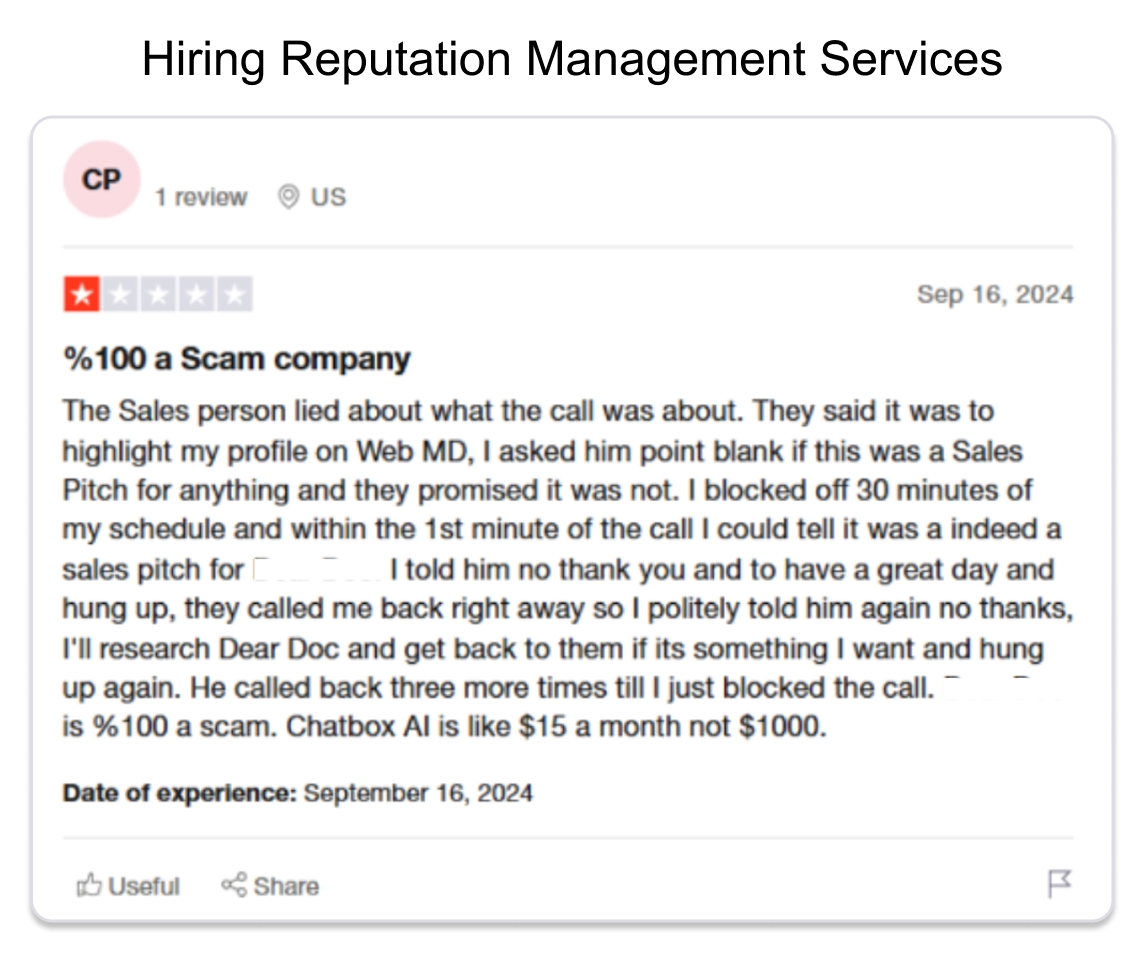
This is, frankly, the “easiest way” I referenced in the title. I’ll be transparent about our process at Reputation America because I believe businesses deserve to know what they’re getting before they invest.
In our most recent case with Trustpilot, our client faced multiple fraudulent ratings. The entire process took two weeks from consultation to removal. The comments contained serious fraud accusations. Trustpilot requires proof in these cases and handles cautiously to avoid defamation liability. One comment also contained hidden advertising for a competitor, violating content policies.
Resolution: Trustpilot is careful with the reviews, accusing businesses of fraud, because if not proven, the company may file defamation lawsuits against the platform. One of our strategies was to show the false accusations. Moreover, we saw a competitor promotion, which violated the content guidelines.
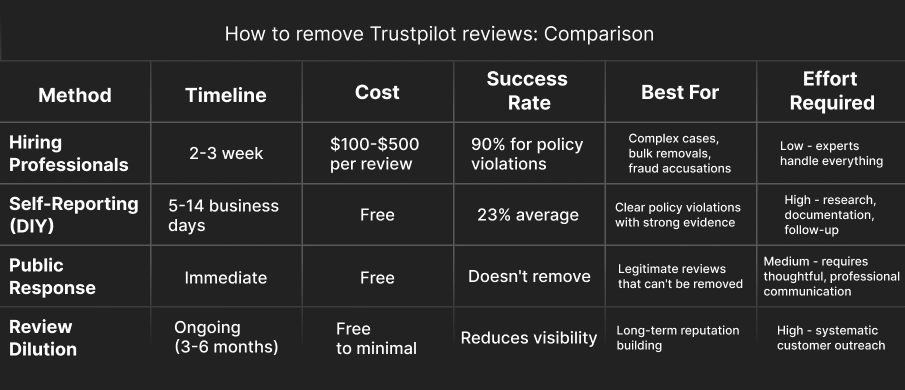
The Investment: The client paid $100 per review. Our pricing policy suggests we lower standard pricing when handling multiple cases.
Requirements: For cases, we request moderation access to the client’s Trustpilot account, a Statement of Work with content links, screenshots, deadlines, and pricing, and a Service Agreement. This document protects both sides and provides clear expectations.
P.S. We always ask for permission to work on behalf of a business, which increases our chances of getting a prompt response from a human rather than a bot and having positive claim results.
Reporting and Flagging Inappropriate Reviews Yourself
If you prefer handling feedback removal yourself, Trustpilot provides an accessible reporting system.
Step-by-Step Flagging Process:
Step 1:
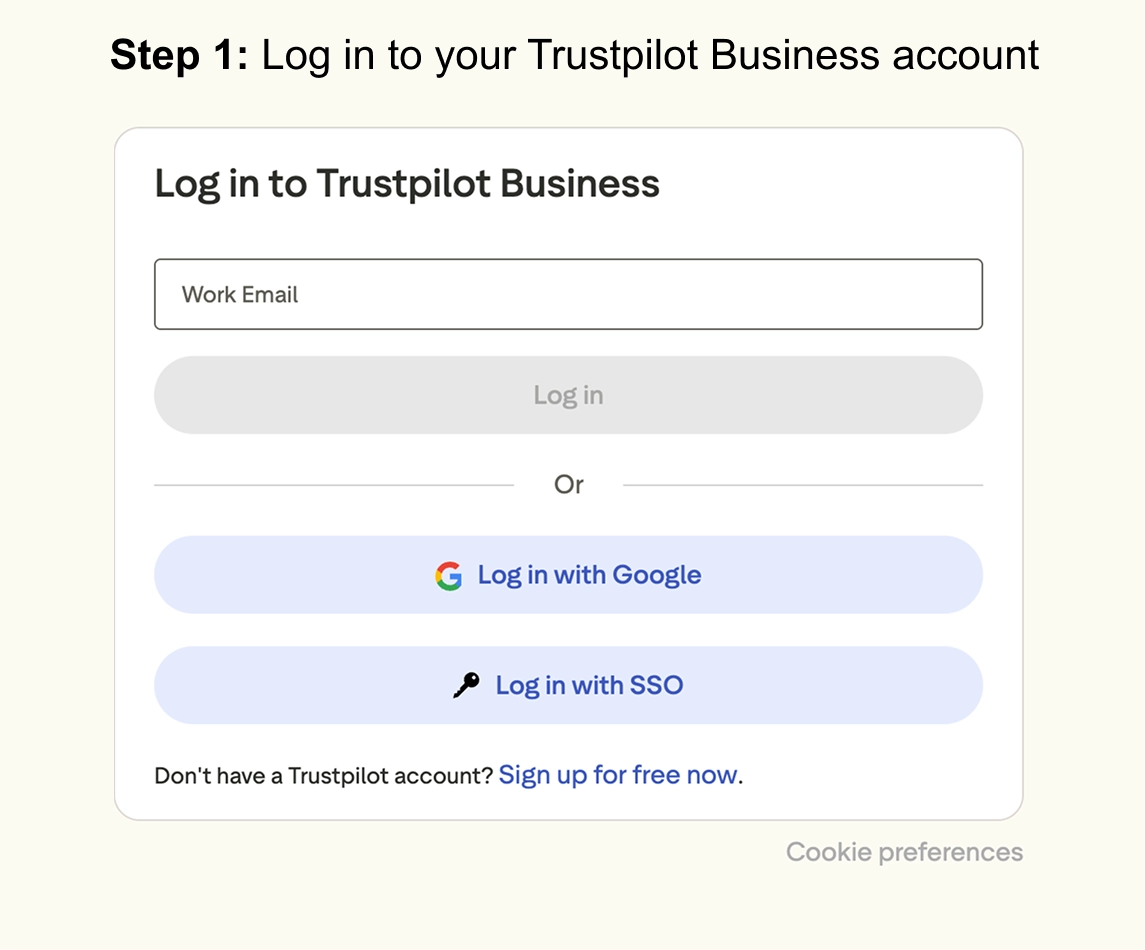
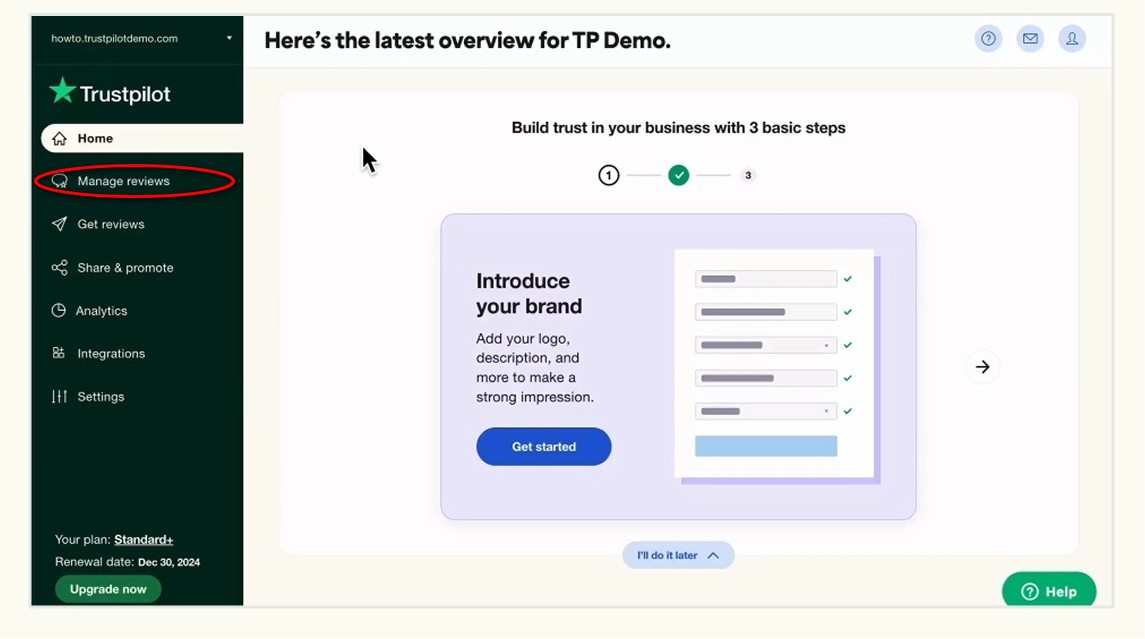
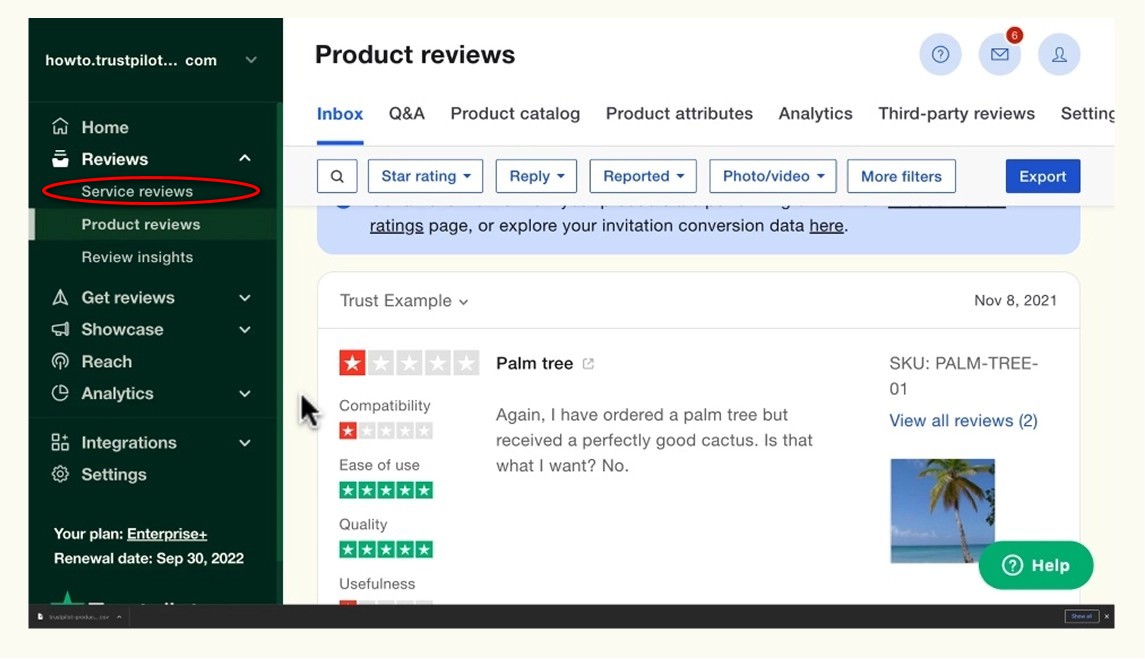
Step 2: Navigate to “Manage Reviews” on the left-hand menu, then “Service Reviews”
Step 3: Search for the negative review
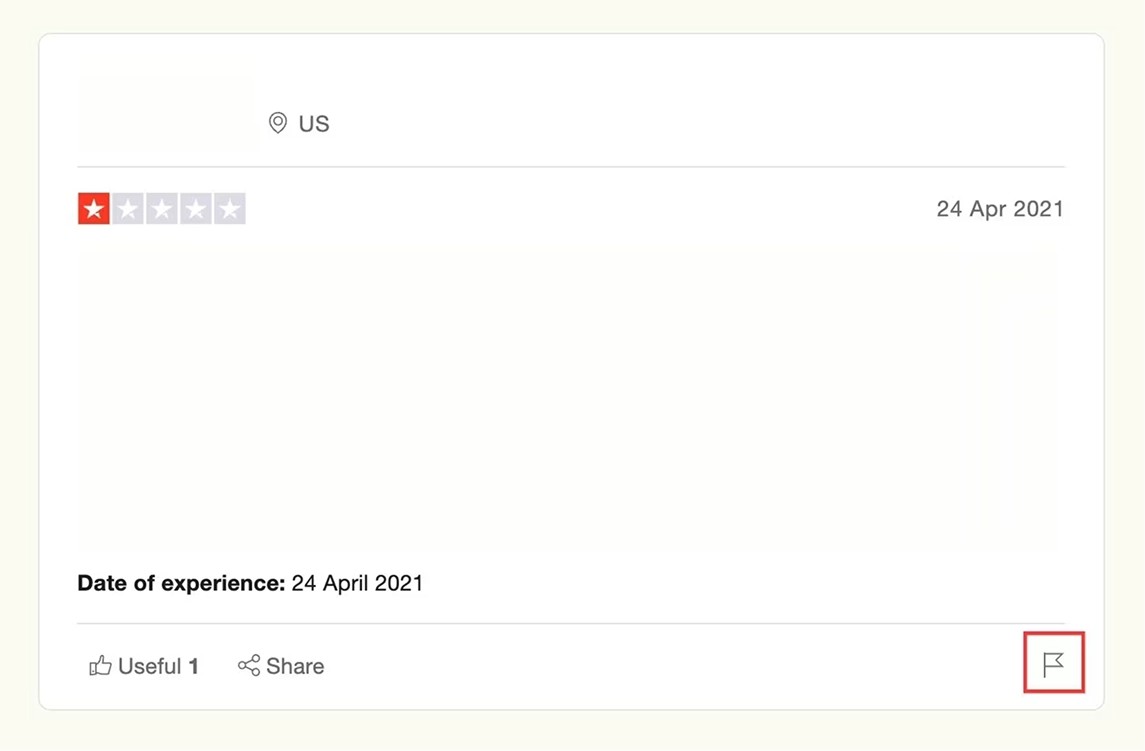
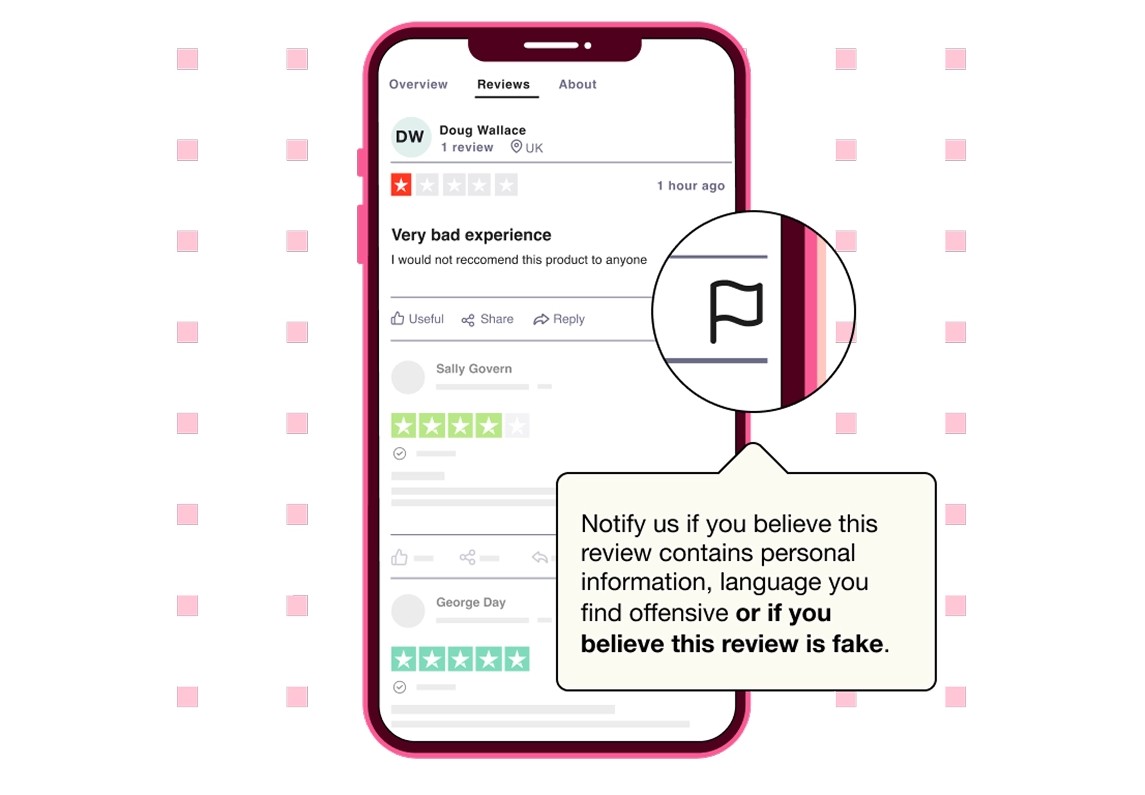
Step 4: Click the flag icon on the review itself
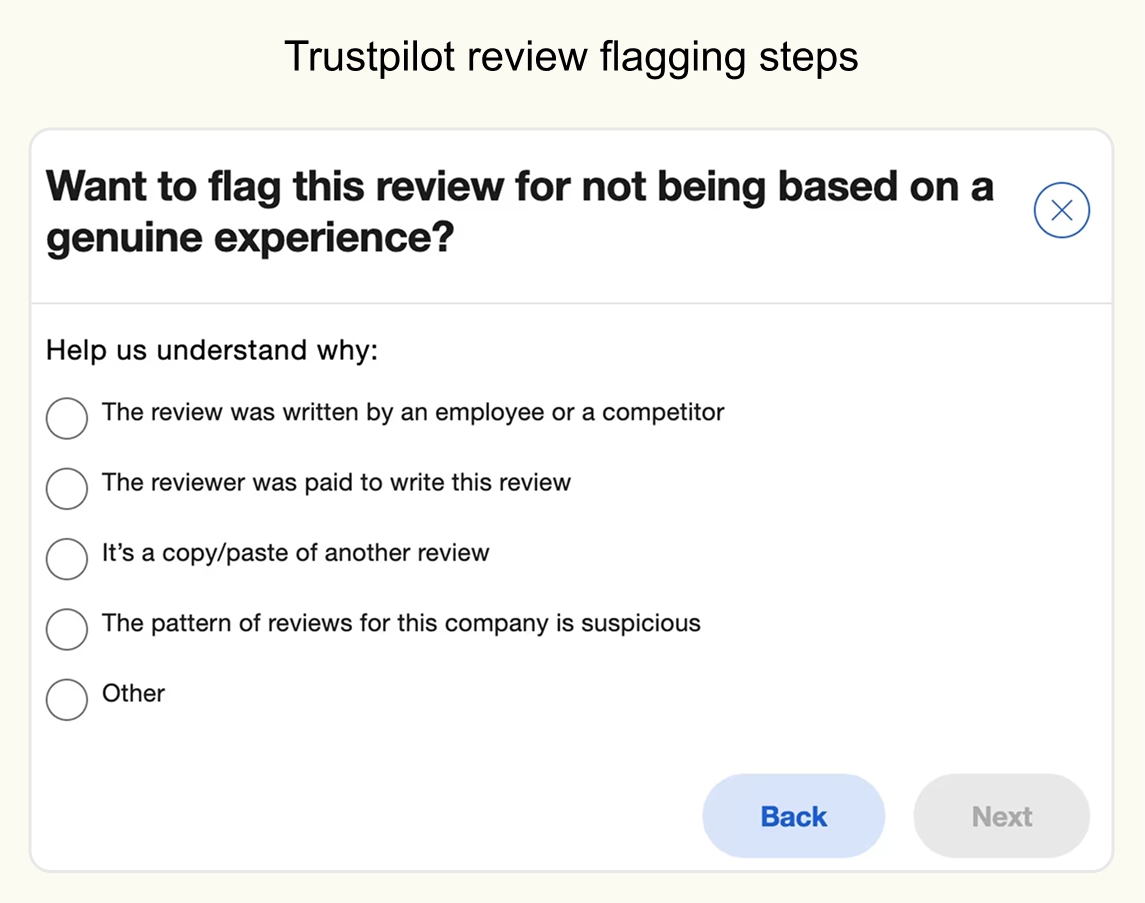
Step 5: Choose the reason that best fits (e.g., “Harmful or illrgal,” “Not a genuine experience”)
Step 6: Contact Support to provide detailed evidence (This is where most people fail)
- Specific policy violations with direct quotes from the review
- Evidence disproving false claims
- Documentation showing the reviewer isn’t a true customer
- Any suspicious patterns (multiple submissions from the same IP address, created the same day, etc.)
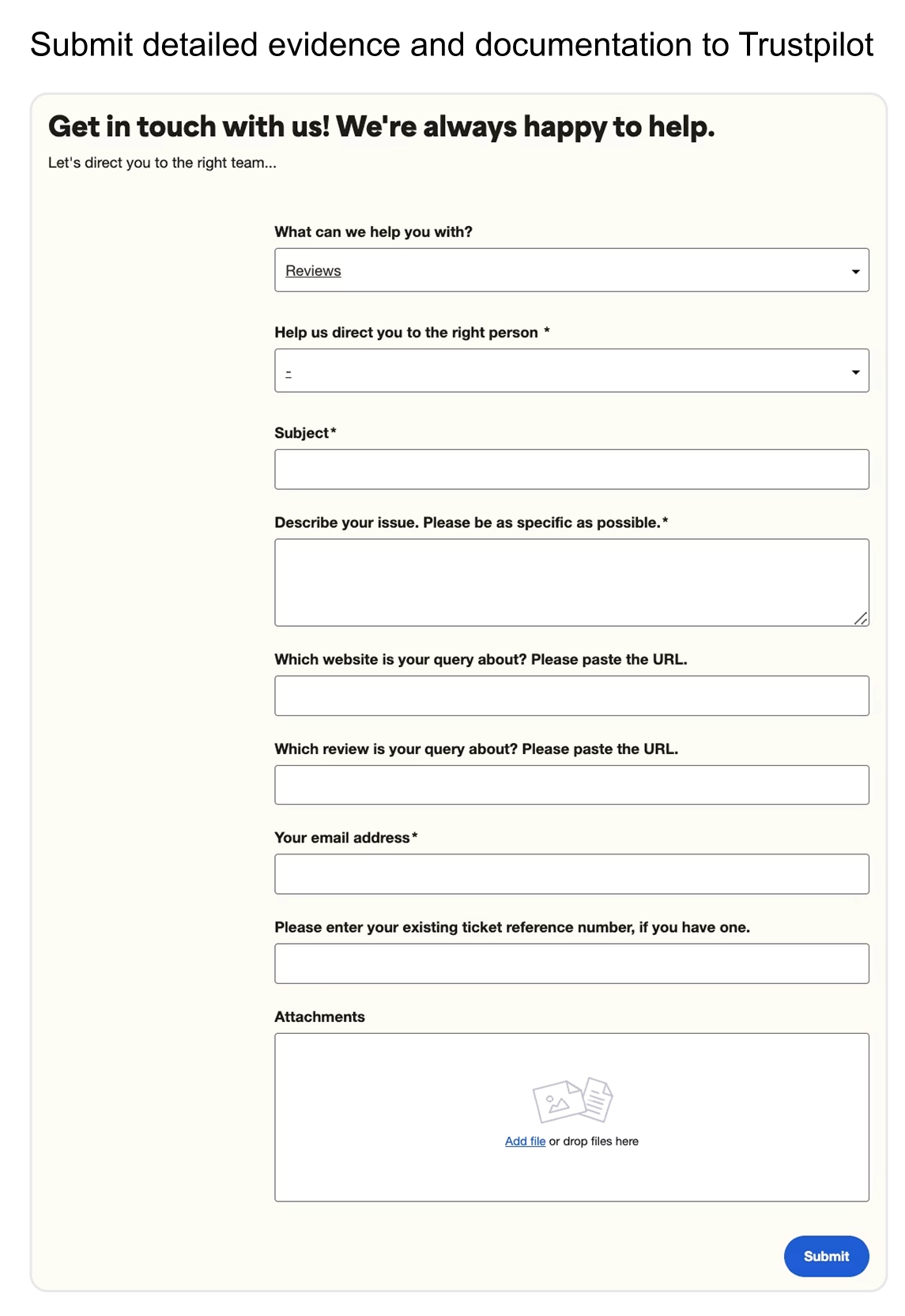
Step 7: Submit and document your report
Responding to Trustpilot’s Feedback
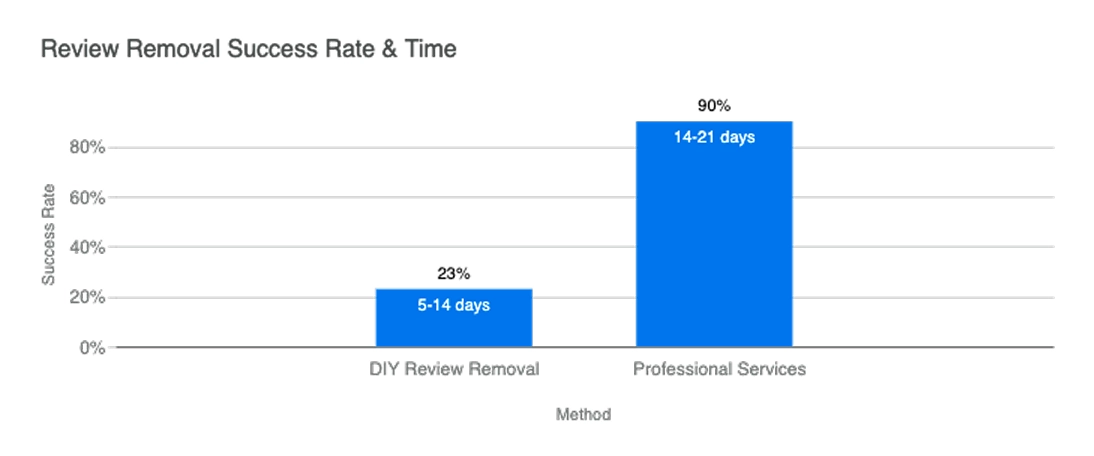
Trustpilot typically responds within 5-7 business days. Complex cases or high-volume inquiries can take up to 14 days. What answers may you receive?
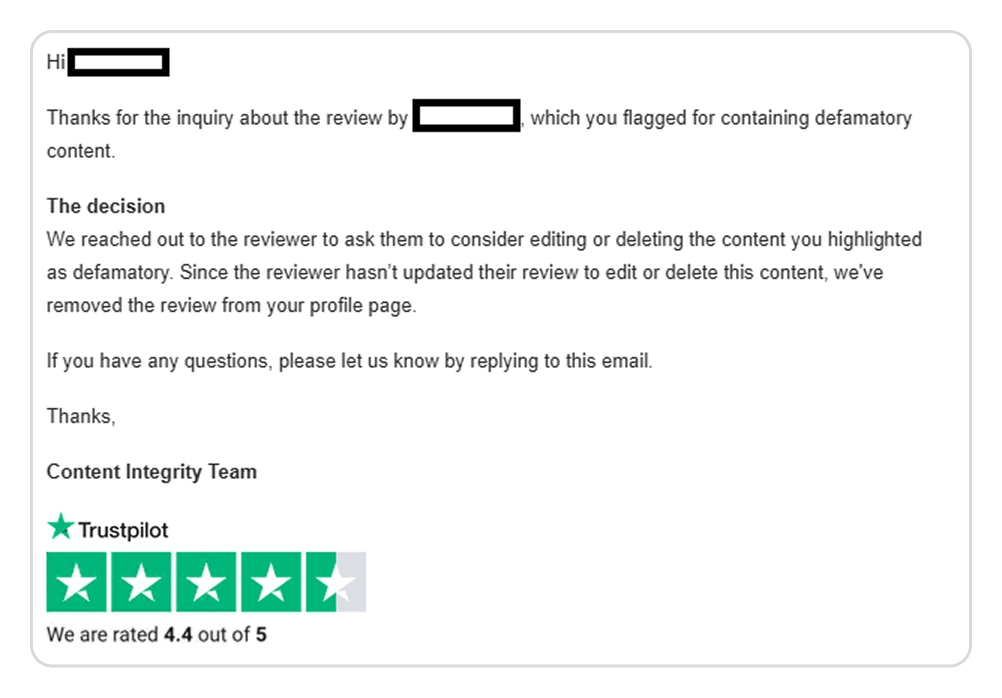
- Removal approved: You’ll receive confirmation of removal via email.
- More information needed: Trustpilot may require additional evidence. Each such request will reset its processing period, so please be patient and provide as much as you have at once.
- Removal denied: If the review doesn’t violate guidelines (according to Trustpilot), you can appeal this decision by providing more evidence.
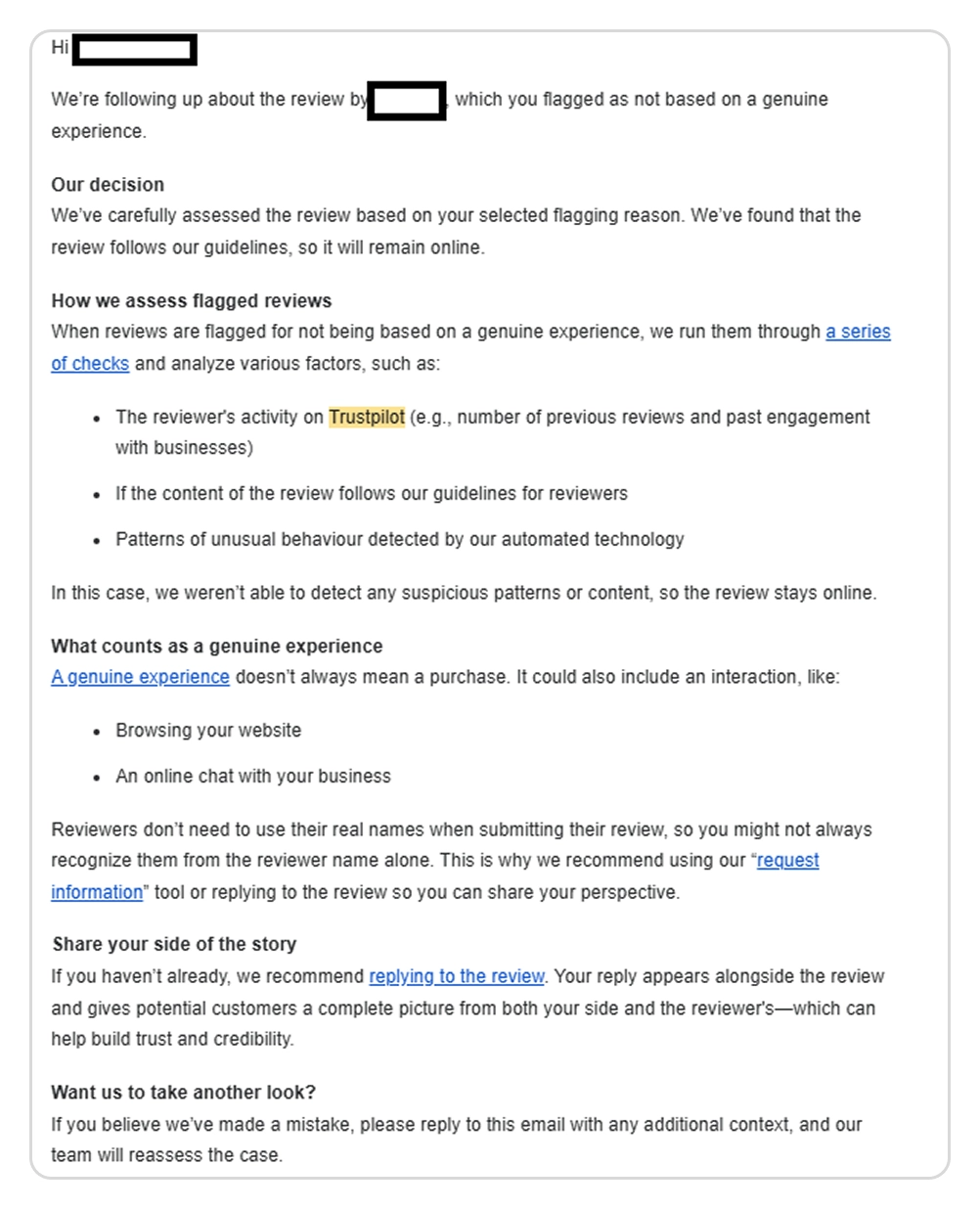
We have worked on hundreds of removal claims, and we clearly know from the beginning which cases will be removed and which ones will be denied. Often, people think that their subjective disagreement is enough for a removal claim. Remember, your feelings aren’t enough; Trustpilot focuses on whether the review follows their rules.
Response Time
The response time depends on several factors:
- Volume of requests
- Case complexity
- Evidence
Ex-employee feedback is usually the easiest to remove. On the other hand, feedback based on customer misunderstandings is the hardest to remove, since the reviewer is sharing a genuine personal experience.
Alternatives to Removal
Sometimes the best solution isn’t to claim negative rating removal; it’s to respond strategically.
- Respond Publicly: Respond quickly, professionally, and politely to feedback. Never be defensive. Often, businesses make fatal mistakes by responding defensively or emotionally, which is the shortest way to escalation. Try to listen to your customers and show them that you care. Here is an example of a polite and professional response.
“Thank you for sharing your experience, and we’re sorry we disappointed you. You’re absolutely right that we should have communicated proactively about your issue, and that’s our responsibility. (Here you can describe their pain and the solution you offer). Our team has already improved our services, and we’d love to make this right. Thanks again for holding us accountable.”
- Use AI to write a response: If you can’t set aside your emotions, ask AI to help you write a professional, empathic, and constructive response. Here is an example of a prompt:
“Write a professional and empathetic response to this review on Trustpilot: [add a review]. The response should express genuine concern and show commitment to resolving the issue without admitting fault publicly. The tone should be calm, sincere, and respectful. Include:
- An acknowledgment of the customer’s experience.
- An apology for any inconvenience.
- A reassurance that their feedback is valued.
- An offer to resolve the matter privately.
- A strong closing line to reinforce trust and appreciation for their feedback.
- Encouraging Updates: If you successfully resolve the issue with the customer online or offline, you can politely ask them to update their review. Trustpilot allows full edits, which is one of its advantages.
- Dilution Strategy: If you can’t delete a bad Trustpilot review, bury it with positive ones. Encourage your customers to review your profile and increase your TrustScore.
Preventing Future Negative Trustpilot Reviews
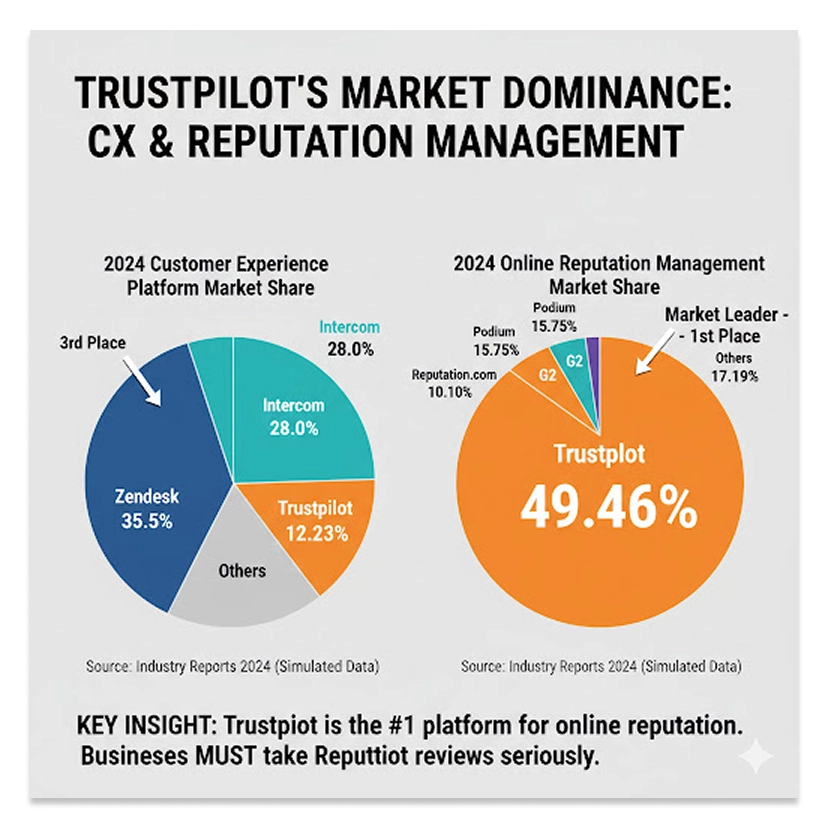
Trustpilot can definitely have a significant impact on your business reputation, and it is better to prevent negative reviews than to deal with removal claims.
Your quick action plan
- Right after you register your company on Trustpilot, enable notifications for ratings.
- Set up a reminder to check your profile regularly.
- Answer all comments (negative and positive).
- Consider your reviews as a unique source of customer feedback.
- Promote your Trustpilot profile across social media channels
Reputation America’s Work Experience with Trustpilot Reviews
Flagging obvious fake reviews is easy. But what about the hard cases? What about a 1-star rating that is technically true but absolutely misleading?
This is where you need help to go beyond the Trustpilot automated response. Our team acts as a neutral third party who listens, validates their frustration, and sometimes explains the damage the rating is doing to a business. We don’t have a one-size-fits-all approach. Instead, our expertise lets us find the best approach and a combination of strategies to remove the Trustpilot review.
What We Do:
- Case analysis to identify all possible removal angles.
- Evidence gathering and legal documentation for platform submissions.
- Platform negotiations with Trustpilot’s compliance teams.
- A lifetime guarantee ensuring that the removed content doesn’t reappear.
What We Don’t Do:
- Write fake positive reviews or engage in any fraudulent activity.
- Threaten or harass commenters or use any illegal tactics.
- Guarantee removal without investigating the case.
- Hack platforms or accounts to remove reviews.
- Make unrealistic promises about reviews that don’t qualify for removal.
- Share client information with third parties.
- Operate without proper legal agreements protecting both parties.
Conclusion
Managing your reputation, whether on Trustpilot, your social media, or any other review platform, is no longer optional. It should be part of your everyday job. I’ve seen too many businesses losing customers because of negative ratings they could have addressed on time.
The most important lesson from my experience: don’t wait until a reputation crisis forces you to act. Bad things happen even if you keep everything under control.
If you’re currently dealing with false, defamatory, or fraudulent Trustpilot reviews that are damaging your business, don’t wait for the problem to resolve itself because it won’t.
Your reputation took years to build. Don’t let false feedback destroy it in weeks. Contact Reputation America for a free consultation and take control of your reputation today.
FAQ
The time depends on the approach you have chosen. The DIY flagging process typically takes 2-10 days. Professional reputation management services and legally backed negotiations can take from 14 to 90 days, but we usually get the first response in 7 days. Emergency cases with clear legal violations can be resolved in 48-72 hours.
Yes, 100%. We use Trustpilot's own guidelines, copyright law (DMCA takedowns, if applicable), and direct, legally backed negotiation with reviewers. We never hack, threaten, or engage in any unethical practices.
Trustpilot has clear content removal guidelines, and only reviews violating them can be removed. This includes fake reviews from non-customers, defamatory content with false statements, personal information or privacy violations, spam, or promotional content.
The costs vary based on case difficulty and the number of reviews. At Reputation America, we charge $450 per review, but pricing is quite flexible depending on the number of reviews.
This is rare, but it may sometimes happen. That is why we offer a lifetime guarantee. If a review we have removed reappears, we remove it free of charge.
List of sources
- News Firm’s libel claim over Trustpilot reviews rejected by High Court
- How Online Reviews Influence Sales
- How Customer Reviews Can Make or Break Your Business
- How Trustpilot reviews help US businesses cut through the noise
- The importance of Trustpilot customer reviews for your brand
- The Importance of Trustpilot Reviews for Businesses






This article does not have any comments. Be first to leave one.